CATL's $10B Profit Surge Arrives Just as Europe's Battery Champions Collapse
Contemporary Amperex Technology Co. Limited (CATL) just posted ¥73.4 billion in net profit for 2025—roughly $10 billion, up 42.3% year-on-year. That's the Chinese battery giant's fastest growth in three years, and it comes precisely as Europe's homegrown battery manufacturing ambitions crumble.
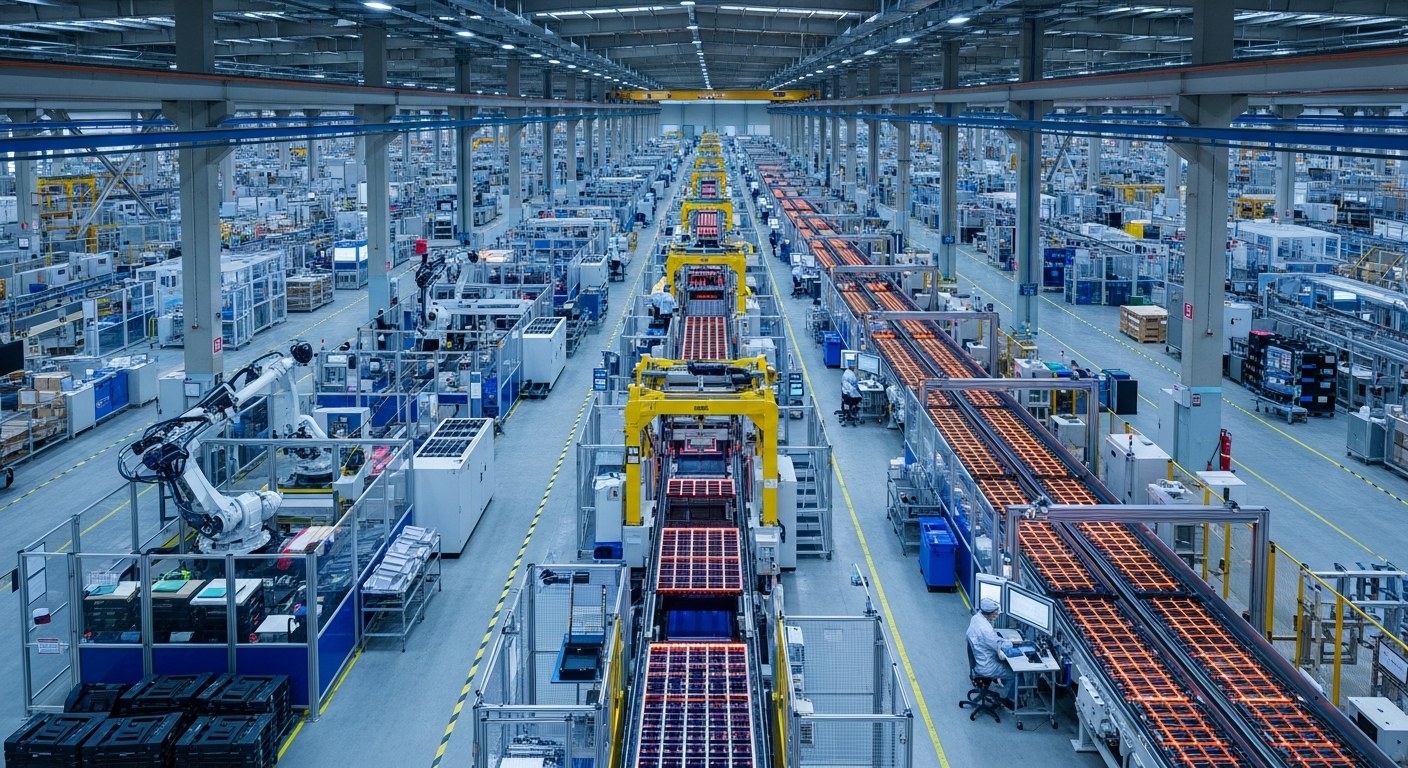
The timing couldn't be more pointed. While CATL's Debrecen gigafactory in Hungary began production in early 2026—earning recognition as Europe's most impactful mega FDI project—Northvolt filed for bankruptcy and ACC shelved two of its three planned European plants. For European founders betting on local supply chains and investors who poured billions into battery independence, CATL's results read like a report card on strategic failure.
The numbers tell a dominance story
CATL's FY2025 revenue hit ¥423.7 billion, up 17% year-on-year, beating analyst estimates. More telling: gross margins expanded to 26.27% from 24.44% the prior year. Those aren't the margins of a company racing to the bottom on price. They're the margins of a manufacturer achieving scale efficiencies that European competitors can't match.
The €7.3 billion Debrecen facility represents CATL's confidence in European demand even as local champions falter. Europe's battery energy storage system (BESS) market alone reached 16 GW in 2025, according to Wood Mackenzie. CATL isn't just supplying European automakers—it's locking in the infrastructure market while Northvolt's assets get carved up by Lyten, a U.S. startup that has yet to convince a single major carmaker of its capabilities.
Europe's battery independence bet unravels
Northvolt's bankruptcy marks the most visible collapse, but it's part of a broader pattern. ACC, the Stellantis-TotalEnergies joint venture that once symbolized European battery ambition, halted construction at two of three sites amid slowing EV adoption. Eurofound's recent analysis described European battery manufacturing as moving "from hope to crisis to hope again"—though the "hope again" phase remains conspicuously light on functioning gigafactories.
The strategic miscalculation was twofold. First, European policymakers assumed demand would outpace supply indefinitely, creating space for higher-cost local production. The EV slowdown shattered that assumption. Second, they underestimated CATL's willingness to manufacture on European soil, neutralizing tariff and supply chain arguments for backing local players.
CATL is now expanding to additional European countries beyond Hungary, according to multiple automotive trade publications. Each new facility makes the case for European battery independence harder to articulate with a straight face.
What this means for European stakeholders
For European automotive OEMs, CATL's expanding footprint offers cost certainty and proven technology—but at the price of deeper dependency on a Chinese supplier. Stellantis, Volkswagen, and BMW are already CATL customers. The Debrecen plant simply moves that dependency inside EU borders without changing the fundamental equation.
For investors who backed European battery plays, the CATL results clarify the competitive gap. It's not just scale—it's margin expansion while scaling, suggesting manufacturing expertise and supply chain integration that European startups couldn't replicate fast enough. Northvolt raised billions; Lyten's post-bankruptcy acquisition doesn't restore that capital or the years spent building capacity.
For founders in the battery tech stack—materials, recycling, manufacturing equipment—CATL's European expansion creates partnership opportunities, but the power dynamic is clear. The Chinese giant sets terms; European players fill niches.
The brutal reality is that Europe's battery independence strategy assumed a protected window for local champions to reach competitiveness. CATL's 2025 results, and its aggressive European manufacturing push, suggest that window never existed. What looked like a multi-year transition is resolving into a binary outcome: CATL operates profitably on European soil while European-branded alternatives enter receivership or indefinite delay.
The question for European policymakers isn't whether to compete with CATL—that race is largely run. It's whether strategic autonomy in batteries means anything when the factories are in Hungary but the profits flow to Ningde.
Sources
- WSJ, CATL financial filings
- Gasgoo, automotive industry reporting
- Autonews Europe
- Just-Auto industry analysis
- Reuters
- fDi Intelligence, FDI project tracking
- Wood Mackenzie (BESS market data)
- Eurofound, European battery manufacturing analysis
Sources
Sources
- Doubling time: 196 days meta^manus AI's oligarch control ...
- Your Money with Michelle Martin
- I Have a Plan – Works Rights Compliance Alliance
Sources
- "High performance systems drive klydexglobal exchange growth.ehm"
- News Headlines - Penn Economics
- Your Money with Michelle Martin
