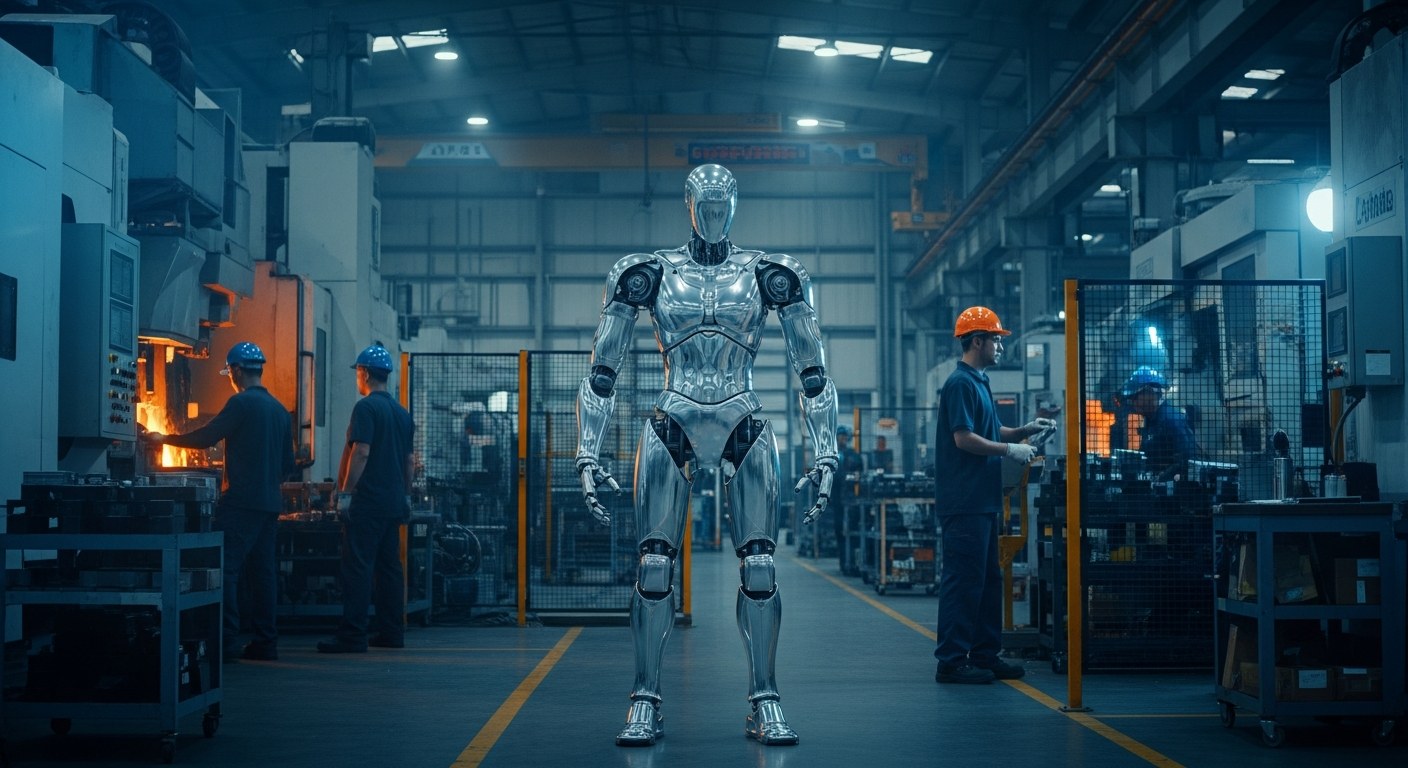
Chinese Humanoids Are Touring Global Expos. The Real Story Is What Comes After the Demo.

Unitree and AgiBot are turning trade-show spectacle into a sales funnel, using Europe as a proving ground for localized deployments rather than just robot theater.

The expo circuit is becoming a go-to-market machine

Chinese humanoid robotics companies spent the past year dominating attention at major international events. Unitree became one of the most visible names in humanoid robotics at CES 2026, while Chinese vendors including Unitree and AgiBot also featured prominently in the industry's broader 2026 expo calendar, from Korea's Automation World to European launch events.

On the surface, that looks like classic tech-showmanship: backflips, dancing, dexterous hands, human-like movement. But the more important shift is happening off-stage. Chinese robot makers are no longer using global expos only to impress investors or win viral clips. They are using them to open channels, sign distributors, and prepare industrial deployments market by market.

AgiBot is the clearest example. In January 2026 it launched in Milan, announcing a local partnership with Italian systems integrator SIR Spa to support deployment and operations. In February it expanded the European push in Munich with Minth Group, which said it would act as a value-added distributor for Europe and support localized delivery, lifecycle services, and even local manufacturing.

That is not exhibition behavior. That is market-entry behavior.

From robot demos to operational rollouts

AgiBot's Italian launch materials were unusually explicit about where the company thinks demand will come from: industrial manufacturing, logistics sorting, security inspection, hospitality, research, and service environments. In other words, not just humanoids as a novelty, but humanoids as a layer on top of existing automation budgets.

Gasgoo reported that Chinese robotics firms are increasingly moving from product export and demo culture toward systematic overseas implementation, including local support networks and deployment partnerships. Some players now say overseas business contributes more than half of revenue.

That fits the broader backdrop. Euronews reported that 87% of humanoid robots delivered in 2025 were made in China. The total market is still small — just over 13,000 units shipped globally last year, according to the same report — but the direction of travel is unmistakable. China is building early volume, early supply chains, and early mindshare at the same time.

Why Europe matters more than the US right now

Europe is a particularly attractive entry point because it combines manufacturing depth, labour-cost pressure, and a fragmented automation landscape that rewards local integrators. Chinese robot firms do not need to conquer Europe in one move. They can win one warehouse network, one auto supplier, one inspection workflow, or one hospitality chain at a time.

That is why the SIR and Minth partnerships are important. European industrial buyers do not want to import a humanoid and figure it out themselves. They want deployment, service, integration, and accountability. Chinese vendors appear to have learned that lesson quickly.

There is also a policy angle. Europe still has strong industrial automation incumbents and serious robotics talent, but founders and investors across the region increasingly worry that capital, urgency, and scale are elsewhere. If Chinese firms use the expo circuit to establish channel partnerships before European rivals industrialise their own platforms, Europe may end up as the customer and integrator layer while China captures the robot OEM layer.

Why European readers should care

The immediate takeaway is not that humanoids are about to replace Europe's factory workers next quarter. They are not. The more realistic point is that Chinese firms are compressing the time between demo and deployment.

For European operators, the question is no longer whether the technology looks impressive on stage. It is whether Chinese vendors will become the default suppliers when factories, warehouses, and service environments begin running real pilot programs. Expos are just the front door. The actual contest is now moving into integrator contracts, after-sales support, and factory floor reliability.

Sources

Sources